There is a particular kind of disappointment that comes from falling for a house with an arched window and then realising, three weeks in, that no off-the-shelf blind will fit it. The same goes for the dormer with the sloping head, the round window above the stairs, the hexagon in the old bathroom. Odd shapes are beautiful and a nuisance in equal measure. Covering them is a solved problem, though — it just takes a different order of operations. You measure more carefully, you decide which part of the shape you actually want to keep visible, and you pick hardware that can follow a curve. Here is how to work through it without wasting money on a custom order that misses by a centimetre.
Read the shape before you shop
Not all arches are the same, and the difference matters when you order. A true half-round is a semicircle: its rise equals half its width, which makes a shaped shade relatively straightforward to specify. A segmental arch is shallower, an eyebrow that only cuts the top few centimetres — often the easiest of all to cover with a straight blind mounted above. Elliptical and pointed Gothic arches sit in between, and both need a template rather than a radius. Beyond arches, you will meet circles, ovals, trapezoids, windows that follow a staircase, and rectangular openings set into sloped ceilings.
Next, check whether the opening is genuinely square. Measure both diagonals across the rectangular portion of the frame. If they differ by more than about five millimetres, the window is out of square and a made-to-measure blind cut from width and drop alone will hang with a visible gap along one side. That is your cue to use a template or to mount outside the recess, where the frame's irregularities stop mattering.
Finally, look at the reveal. A depth of four to five centimetres gives an inside mount room to sit comfortably. Under two, you are better off outside. Note anything in the way: handles, winding cranks, trickle vents, a radiator below, tiles that finish inside the recess.
Measure the way a fitter would
Accuracy here saves an expensive argument later. Work in millimetres, write everything down, and never measure from a drawing or an old photograph of the room.
- Width, in three places. Measure the rectangular section near the top, at the middle and near the bottom. Use the narrowest figure for an inside mount, the widest plus an overlap for an outside mount.
- Drop, in three places. Left, centre and right. Again, the shortest wins for an inside mount.
- The arch itself. For a shaped shade, record the total height at the centre, the height at the springline where the curve begins, and the chord width across the widest point.
- A template, if the curve is anything but a clean half-round. Tape stiff paper or card across the opening, press it into the corner where frame meets glass, and rub gently with the side of a pencil. Cut along the line, check the fit, and label the side that faces the room.
- Mounting surface. Note where there is solid timber to screw into. On many arches the head of the frame is glass, and your fixings have to land on the springline or on the vertical jambs.
Measure twice, on two different days if you can. Rooms move, and so do tape measures in unpractised hands.
Blind types that follow a curve
Most of the practical options fall into a handful of families. Each solves the shape problem differently, and the right answer usually depends on how much light you are willing to give up.
- Shaped Roman or soft shades. Fabric cut to the arch and hung from a curved or straight headrail. Warm, quiet, and forgiving of a frame that is a few millimetres out. Best in living rooms and bedrooms where you want softness rather than a hard edge.
- Cellular shades in custom shapes. Made to the outline of the arch, with cells that trap a layer of air against the glass. The neatest option for a stairwell or a north-facing window where condensation is an issue.
- Roller blinds cut to shape. Crisp and inexpensive relative to fabric shades, but the cut edge is visible when the blind is down, so it suits a confident, contemporary room better than a period one.
- A straight blind above the arch. The simplest solution of all: mount a rectangular blind outside the opening, high enough to clear the curve, and treat the whole window as a rectangle. It hides the shape, which is either the point or a tragedy, depending on the room.
- Shutters with a custom arch panel. Elegant and hard-wearing, but heavy, slow to arrive and the most expensive route by some distance.
One useful combination for tall arched windows: a fixed or operable fan shade in the arch, and a separate rectangular blind below, both from the same collection so the fabric reads as one piece.
Inside, outside, or over the top
An inside mount keeps the reveal clean and lets the arch keep its silhouette. It only works when the recess is deep enough and the frame is reasonably true. On a curved top, the headrail usually has to sit at the springline, so the arch above stays bare — which many people find charming and others find infuriating at six in the morning in July.
An outside mount is the pragmatic choice for awkward shapes. Fix a straight rail above the highest point of the arch, wider than the opening by five to ten centimetres on each side, and let the blind fall past the frame. The result is a deliberate rectangle that calms a busy wall. Do check what is above the window: a deep cornice, a curtain track or a beam can leave no room for brackets.
If you want the arch covered but the line kept soft, mount a curved headrail on the face of the frame, following the curve. This is where a template earns its keep.
Light, controls and details people forget
Think about what the window does before you think about what it looks like. A west-facing arch over a stairwell will throw hard afternoon light across the landing and fade whatever hangs opposite; a sheer or cellular shade takes the glare off without turning the space into a cave. A bedroom arch needs proper blackout, which usually means a shade with side channels rather than a simple roller.
Controls matter more on high windows than on any other. A cord dangling from a three-metre arch is both awkward and a safety risk — keep cords short, loop-free and out of reach, or choose a cordless spring system, a wand control or a motorised headrail with a remote. For anything above head height, a long pole or a motor is not a luxury.
Two smaller points. Light fabrics stack into a smaller roll or fold, which matters when the blind sits inside a shallow recess. And on cold single-glazed glass, leave a small gap between fabric and pane so moisture can escape rather than wicking into the hem.
Styling an awkward shape
The instinct is to hide a strange window. Resist it for a moment. An arch is one of the few genuinely graceful things a wall can do, and covering it entirely in a flat rectangle can make a room feel shorter. Consider leaving the curve bare and covering only the rectangular portion, so the shape reads clearly and daylight still arrives up high.
If you do cover everything, use the bottom edge of the blind as your horizontal. Line it up with the tops of the other windows in the room, or with a picture rail, and the odd shape suddenly belongs to a rhythm. Match the blind to the trim for a quiet, architectural look; pick a deeper tone than the wall when you want the window to be the feature.
Curtains can work alongside a shaped shade. Hang a straight rod well above the arch, wide enough that the curtains clear the glass when drawn, and let the fabric frame the shape rather than fight it.
A last look before you order
Custom blinds are usually non-returnable, so the final ten minutes are worth taking. Re-measure everything once more. Confirm the arch is a true half-round or send the template. Check that both parts of a two-piece window come from the same fabric batch. Ask how the headrail is fixed to your specific frame, and whether the brackets will clear any handle or vent. Then step back into the doorway and look at the window the way a guest will — if the solution you have chosen makes the room feel calmer from there, it is the right one.
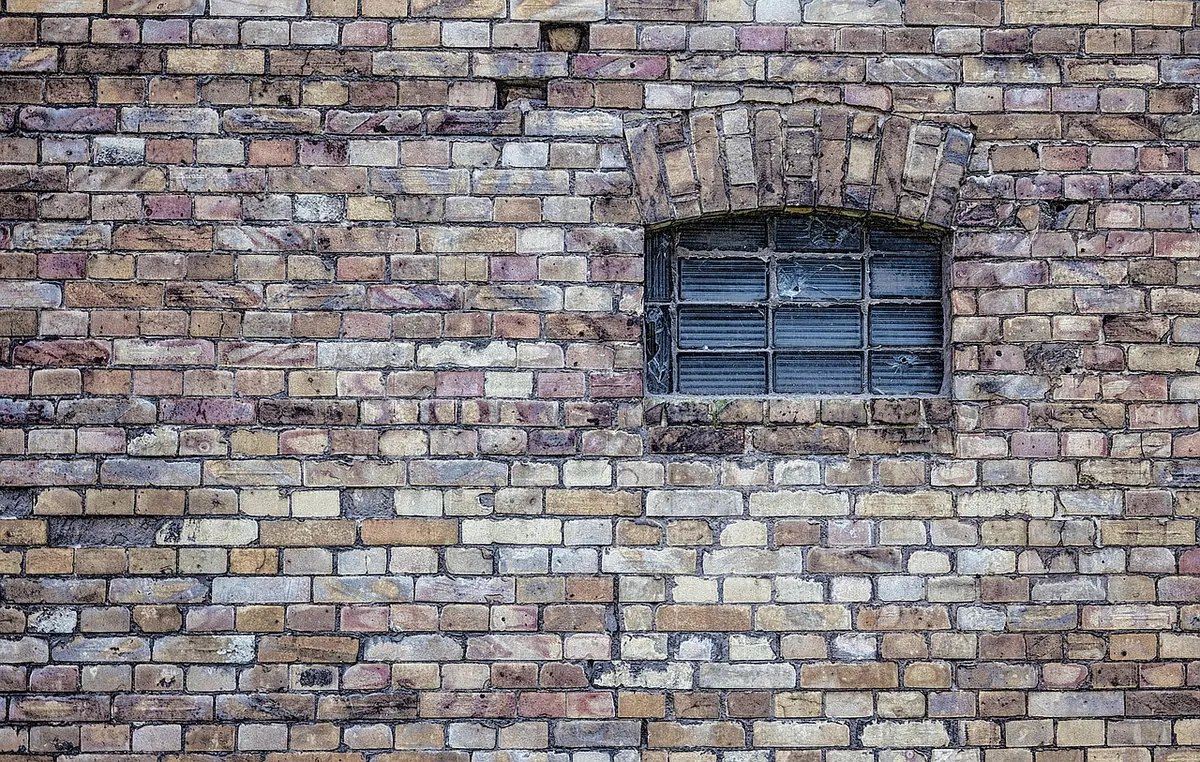
Photo: Nikiko / Pixabay